Product Update | Asset Auditor incorporates user access, permissions, and asset sharing
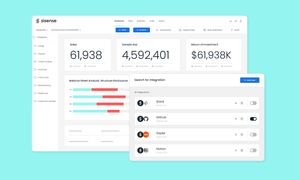
A more user-centric Asset Auditor In this release, we’re excited to introduce a user-focused expansion of the Asset Auditor, including two new dashboards, Users and Users Validation, along with enriched underlying data. You can now easily understand: Who has access and permissions to which data assets How assets are shared across your organization Whether access could be impacting engagement Revealing how their access and permissions connect to your data assets With this release, you get a clearer, more actionable picture of how people and assets interact to empower better oversight. We’ve also made major improvements across the existing dashboards to integrate this new data, elevate insights, and provide more actionable recommendations. Assets can’t deliver value unless users can access and engage with them In Sisense, dashboards and data models are governed by separate access controls. And they don’t operate in silos. They’re shared, cloned, embedded, and repurposed across teams. When someone shares a dashboard, they may not have permission to share the underlying model. The result? Users open dashboards expecting insights, only to find missing charts or blank visuals. They’re unsure whether the data is broken, restricted, or simply unavailable, while the sharer assumes everything is fine. The Asset Auditor gives clear visibility into which users or groups have: Access to dashboards but not to the underlying data models Access to data models but no corresponding dashboard access No access to any dashboards Yet access alone doesn’t guarantee adoption, and adoption issues are often misdiagnosed as access problems. Are dashboards underused because people truly lack access? Or because they simply aren’t engaging with the content? By surfacing these mismatches, you can prevent confusion, improve collaboration, and ensure every shared dashboard delivers the full experience it’s meant to. By detecting both over-permissioning and under-permissioning, you can tighten governance without slowing productivity. Permission drift happens quietly, introducing operational risk long before it becomes visible Do users have the correct permissions? Do some users have too many permissions? Do users have permissions to data models or dashboards that they shouldn’t? Use the Asset Auditor to see whether users have the right level of access: too little to be effective, or too much for their role. Identify misaligned configurations, such as users who maintain data model access for development or testing, but no corresponding dashboard access, which is a strong indicator that permissions no longer reflect the real workflow. By detecting both over-permissioning and under-permissioning, you can tighten governance without slowing productivity. Understand the reach of your dashboards across users and groups The Asset Auditor helps you understand the reach of your dashboards across users and groups, revealing how far each asset spreads and where engagement actually concentrates. Detect and reduce redundancy, find duplicates or overlapping assets shared across teams. Pair these insights with Sisense Usage Analytics to understand not just who can access assets, but who actively engages with them. By bringing these signals together, teams can zero in on whether the problem is permissions, visibility, or user behavior. The Asset Auditor provides much more data and insights beyond users and shares! Check it out and get smarter about how you manage your data assets. If you want to start getting better visibility into what your assets are doing inside your environment, reach out to us for a live demo or a free trial.18Views0likes0CommentsQBeeQ Snowflake Monitor: Understand your Snowflake costs and get more value from every credit
QBeeQ Snowflake Monitor, a new Sisense plugin designed to help you bring clarity and control to your Snowflake spend directly within your Sisense environment. Sisense customers can easily connect to their existing Snowflake Account Usage and Organization Usage schemas, no custom ETL pipelines or workarounds required.27Views2likes0Comments
Outer joins (preview) - Release notes
An outer join (left, right, full) combines data from two tables, including all matching rows and any unmatched rows from one or both tables, filling in NULL for missing data. Analytical platforms use outer joins to achieve: Broader analytical capabilities: Ensure all relevant data is visible, even if there is no exact match in another table (e.g., view all products, including products with no sales). Identify Gaps: Easily spot data integrity issues and missing information or relationships, which is crucial for analysis and reporting.288Views3likes0CommentsSisense version L2024.3 is now GA for all customers
SRV Connection String Support in MongoDB Connector The MongoDB connector for ElastiCubes now supports the SRV connection string Sisense Mobile App version 3.0.2 has been released Improvements to: Audit Logs, Build, Database, Data Models, Export to Excel V2, Git, and Infra. Many fixes, see the Release Notes. Link to L2024.3 Release Notes Link to L2024.3 full release content (Jira) Link to L2024.3 bug fixes (Jira) Installation links: Generic version link Offline RKE link Provisioner link863Views0likes0Comments
Have you heard about Sisense Intelligence?
Sisense Intelligence is a new suite of AI-powered tools that help product managers and developers build smarter, more intuitive analytics experiences. Features like natural language dashboards, automated insights, forecasting, and data explanations accelerate every stage of the analytics journey. Designed for seamless integration, it empowers teams to deliver fast, user-friendly insights at scale.96Views1like0CommentsDeprecation Notice: Direct Access to Sisense Internal MongoDB
Sisense is deprecating direct connections to its internal MongoDB and related data models to enhance stability, security, and scalability. This does not impact external or customer-managed MongoDB sources, which remain fully supported.165Views0likes0Comments