Product Update | Asset Auditor incorporates user access, permissions, and asset sharing
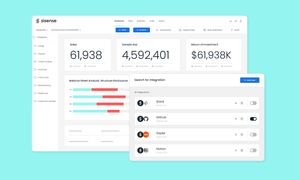
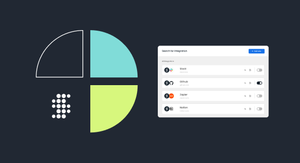
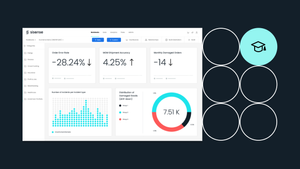
A more user-centric Asset Auditor In this release, we’re excited to introduce a user-focused expansion of the Asset Auditor, including two new dashboards, Users and Users Validation, along with enriched underlying data. You can now easily understand: Who has access and permissions to which data assets How assets are shared across your organization Whether access could be impacting engagement Revealing how their access and permissions connect to your data assets With this release, you get a clearer, more actionable picture of how people and assets interact to empower better oversight. We’ve also made major improvements across the existing dashboards to integrate this new data, elevate insights, and provide more actionable recommendations. Assets can’t deliver value unless users can access and engage with them In Sisense, dashboards and data models are governed by separate access controls. And they don’t operate in silos. They’re shared, cloned, embedded, and repurposed across teams. When someone shares a dashboard, they may not have permission to share the underlying model. The result? Users open dashboards expecting insights, only to find missing charts or blank visuals. They’re unsure whether the data is broken, restricted, or simply unavailable, while the sharer assumes everything is fine. The Asset Auditor gives clear visibility into which users or groups have: Access to dashboards but not to the underlying data models Access to data models but no corresponding dashboard access No access to any dashboards Yet access alone doesn’t guarantee adoption, and adoption issues are often misdiagnosed as access problems. Are dashboards underused because people truly lack access? Or because they simply aren’t engaging with the content? By surfacing these mismatches, you can prevent confusion, improve collaboration, and ensure every shared dashboard delivers the full experience it’s meant to. By detecting both over-permissioning and under-permissioning, you can tighten governance without slowing productivity. Permission drift happens quietly, introducing operational risk long before it becomes visible Do users have the correct permissions? Do some users have too many permissions? Do users have permissions to data models or dashboards that they shouldn’t? Use the Asset Auditor to see whether users have the right level of access: too little to be effective, or too much for their role. Identify misaligned configurations, such as users who maintain data model access for development or testing, but no corresponding dashboard access, which is a strong indicator that permissions no longer reflect the real workflow. By detecting both over-permissioning and under-permissioning, you can tighten governance without slowing productivity. Understand the reach of your dashboards across users and groups The Asset Auditor helps you understand the reach of your dashboards across users and groups, revealing how far each asset spreads and where engagement actually concentrates. Detect and reduce redundancy, find duplicates or overlapping assets shared across teams. Pair these insights with Sisense Usage Analytics to understand not just who can access assets, but who actively engages with them. By bringing these signals together, teams can zero in on whether the problem is permissions, visibility, or user behavior. The Asset Auditor provides much more data and insights beyond users and shares! Check it out and get smarter about how you manage your data assets. If you want to start getting better visibility into what your assets are doing inside your environment, reach out to us for a live demo or a free trial.18Views0likes0CommentsQBeeQ Asset Auditor: A smarter way to manage your Sisense data assets
Optimize to cut storage and processing costs, refine data models, and boost performance Query and dashboard performance are closely linked, often hindered by bloated data models. Excessive columns, unused tables, and inefficient relationships force queries to process unnecessary data, slowing down dashboards. This leads to frustration, delayed insights, and lower productivity. Use the Asset Auditor dashboards to: See all your data sources and follow the dependencies across data sources, data models, tables, columns, and dashboards and widgets Identify table and column utilization across dashboards and widgets for better model design. Target and remove empty and unused data sources, data models, columns, and dashboards By reducing or removing unused tables and columns and optimizing queries, organizations can drive down storage and processing costs while increasing performance and user engagement. Expose (and prevent) hidden dashboard issues affecting your users A key risk in delivering analytics is unintended downstream effects from data model changes, causing broken widgets, missing calculations, and misleading insights. Without full visibility, teams may disrupt critical business data. Errors often surface only when users load dashboards, despite backend checks, leading to frustration, missed insights, and wasted troubleshooting time. The Asset Auditor will help you to identify the source of these errors, from deleted data sources or missing data down to widget-level errors - reducing the time to troubleshoot and identify root causes and push fixes. Use the Asset Auditor at each step to verify that dashboards are error-free when delivered to end-users. Plan and execute changes with more confidence When shared elements are scattered across dashboards, making changes can feel overwhelming without knowing the full scope. The Asset Auditor can help you confidently assess scope by identifying widget distribution across dashboards to answer the questions: Where are these widgets used? Can changes be done manually? Or do I need a script? Making changes to the underlying data models, while preventing errors, has never been easier because the Asset Auditor will show you exactly which dashboards are using which data models, and which widgets are using which tables and columns. When teams make modifications without full visibility, they risk disrupting critical business insights. By proactively assessing the impact of changes, organizations can prevent costly errors, reduce time spent troubleshooting, and maintain high-quality analytics. You can't optimize what you can't see Organizations pour resources into analytics, but without visibility into how data assets are used, inefficiencies pile up, wasting storage, slowing performance, and inflating costs. For those responsible for maintaining Sisense environments, from data architects and model builders to dashboard designers, the challenge isn’t just creating reports—it’s ensuring the entire infrastructure runs efficiently. Asset Auditor changes the game by providing full transparency into how data is structured, utilized, and performing across your Sisense environment. With clear insights into dependencies, usage patterns, and optimization opportunities, teams can refine models, improve query speed, reduce storage costs, and ensure users get accurate, fast insights—all while preventing costly disruptions before they happen.45Views2likes1Comment
Geo Analysis or Spatial Insights - Add-Ons that Nail It!
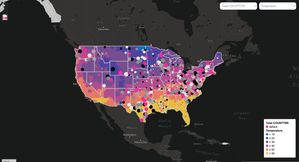
With the importance of geographic analysis coming to light over the last few years, Sisense and QbeeQ are offering geo spatial add-ons that offer a quick and intuitive way to visualize data over an area of interest. Read the article to learn about the full picture of an advanced Geo-Spatial analytical story.4.3KViews6likes0Comments
Implementing Self-Service BI with Sisense: Key Steps and Insights
Discover how our team transformed a backlog of data requests into a seamless self-serve BI platform using Sisense. From gathering requirements to ensuring robust data security, we share our journey and the key steps to empower stakeholders with easy access to the insights they need. Learn how to leverage Sisense for a more efficient and effective BI solution.2.3KViews5likes3Comments
Improvise, adapt, overcome! How to increase the adoption and user satisfaction of dashboards
Discover the art of creating user-friendly dashboards that truly resonate with your audience. Drawing from six years of experience with Sisense, this article dives into dashboard design. Learn practical tips on improving dashboard readability, integrating advanced filters, and using dynamic widgets. Whether you're a seasoned designer or just starting, this guide offers invaluable insights to ensure your dashboards are not only functional but also a delight to use.1.4KViews4likes1Comment
Leveling up analytics: From home-grown solution to Sisense
BigTinCan, a SaaS-based enterprise sales enablement solution developed by a small team in Minneapolis, originally used an in-house developed data visualization system. This system was based on popular open-source graphing libraries and initially met the needs of their customers. However, as the demand for more features such as additional dashboards, reports, automatic subscriptions, and filters grew, the engineering team found itself overwhelmed. The diverse needs of their customers created a never-ending roadmap of feature requests, prompting the team to evaluate commercially available data visualization products.2KViews2likes0Comments